


Short film shows UAF researchers in harsh Greenland landscape
May 28, 2021
Rod Boyce
907-474-7185
鈥淲hite鈥� All color has disappeared,鈥� the caption at the bottom reads, translating the film鈥檚 first words of narrator Aviaja Lyberth, speaking in the Greenlandic language of Kalaallisut.
This is the new short film 鈥淯tuqaq,鈥� an experimental 27-minute documentary that explores a portion of the field research conducted by 久久热视频 Geophysical Institute glaciologist Regine Hock and others, including UAF graduate student Federico Covi.
Radivojevic鈥檚 story in 鈥淯tuqaq,鈥� which translates to 鈥渋ce that lasts year after year,鈥� is one of climate change yet doesn鈥檛 show change. Rather, it shows the land simply as it is now, with a small group of researchers working to understand what is happening to it.
The film covers work during one season 鈥� spring 2018 鈥� of a three-year research project funded by the National Science Foundation. The project included four expeditions to the Greenland ice and the filming of one of those expeditions.
The film was made through the Rutgers Film Bureau of Rutgers University and the Field of Vision production company.
The researchers, working far inland in Greenland鈥檚 southern tip, explored one theory about how meltwater on the ice sheet鈥檚 surface travels to the ocean. The investigators propose that increasing amounts of refreezing meltwater form thick ice layers close to the surface, causing later meltwater to move quickly off the ice sheet and enter the ocean.
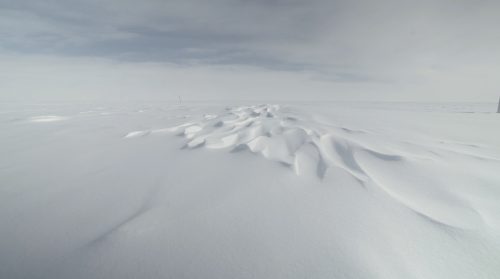
The research isn鈥檛 the star of the film, however. The land and its 久久热视频 have that role 鈥� the pervasive white and the forceful and unimpeded wind of an Arctic snowstorm that persisted for four days and kept Radivojevic and the researchers in their tents.
鈥淚 wanted to de-center the humans, because we are talking about climate, we are talking about nature,鈥� Radivojevic said. 鈥淚 wanted to focus a little bit on the fact that the scientists are visitors in a land that's not their own.鈥�
Hock, the principal investigator on the research project, praised Radivojevic鈥檚 filmmaking approach and noted the film鈥檚 emphasis on the Greenlandic landscape and its inclusion of an Indigenous voice.
鈥淭hat鈥檚 what made it special,鈥� she said. 鈥淥ur science was in there, and our project was in there, but it wasn't the focus at all. It's just merged into this whole story.鈥�
Radivojevic wants people to understand that losing the ice means losing so much information about our past.
鈥淭here are so many climate documentaries out there that people are sort of oversaturated with the same things,鈥� she said. 鈥淲hat I wanted to convey is exactly what it means to be in such a landscape, what it means to be the last of the land that carries such important information and what it means to lose it.鈥�
鈥淯tuqaq鈥� is available on YouTube at and will be shown at select film festivals.
ADDITIONAL CONTACT: Iva Radivojevic, info@ivaasks.com
NOTE TO EDITORS: Photographs and a longer version of this press release are available at the Geophysical Institute website at .